

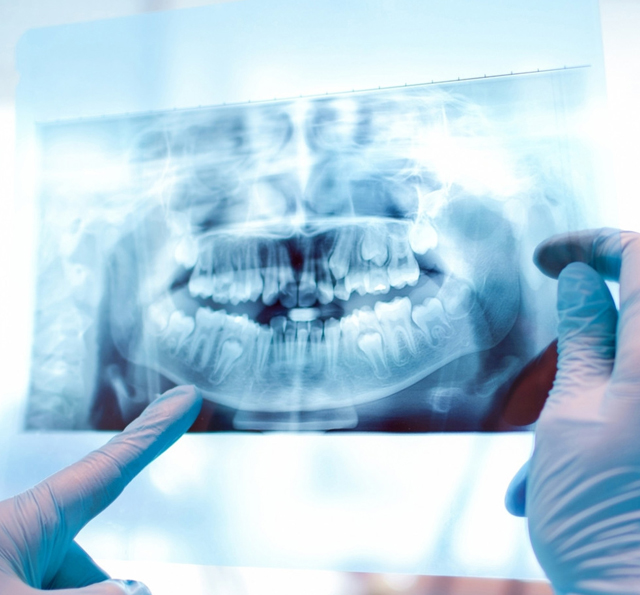
Precision Diagnosis with Advanced Imaging
Digital radiographs, also known as x-rays, are an essential tool for dentists to diagnose and assess dental conditions. At our practice, we provide modern digital x-rays for the convenience and efficiency of your treatment.
In the past, dental x-rays were taken using a film process similar to analog photography. However, with the introduction of digital imaging, computerized radiography has become the standard in the dental industry. Digital x-rays require significantly less radiation, up to 90% less, compared to conventional film-type x-rays, which were already considered low risk. Instead of using traditional silver-oxide x-ray film that needs to be developed and fixed in harmful solutions, the new system captures images using a small electronic sensor.
What Is A Digital X-Ray?
X-rays, also known as radiographs, have been an integral part of dental preventive care for a long time. These electromagnetic rays are invisible to the human eye and were initially named x-rays when scientists discovered them without knowing their true nature.
X-rays have the ability to penetrate soft tissues like the lips and cheeks, but they are absorbed by the hard substances of teeth and bone. This allows dentists to identify potential oral health issues that may not be visible externally. While their primary use is to detect cavities, dentists also utilize x-rays to examine tooth roots, assess the health of the surrounding bone, identify gum disease problems, analyze tooth and jaw positioning, and monitor the development of younger patients.
Type Of Dental Digital X-Rays
There are various types of dental x-rays, such as periapical and full-mouth x-rays. However, the most common type is called bite-wing x-rays, named after the wing shape of the films that were previously used. These x-rays are taken while you are seated in the dental chair and capture an image of multiple teeth, including the roots. A member of the dental team will place a sensor in a specific area of your mouth and ask you to bite down while they direct a tube-shaped device towards your face. This device emits x-rays that pass through your tissues and onto the sensor in your mouth. It is important to note that the emitter does not produce any light or heat. Getting dental x-rays is typically painless.
The Advantage Of Modern Digital X-Rays
One major advantage of modern digital x-rays compared to the old film type is the absence of a delay between taking the x-rays and being able to examine them. With digital x-rays, the image of your tooth can be instantly displayed on a monitor in the treatment room, allowing us to assess your teeth and surrounding structures while you are still in the chair. This immediate access to digital x-rays enables the dentist to quickly evaluate the health of your teeth and identify any potential issues. Additionally, the dentist can easily point out any areas of concern, providing you with a visual understanding of your oral health condition as they explain it. Furthermore, the digital files can be easily shared with other dental professionals involved in your future care.