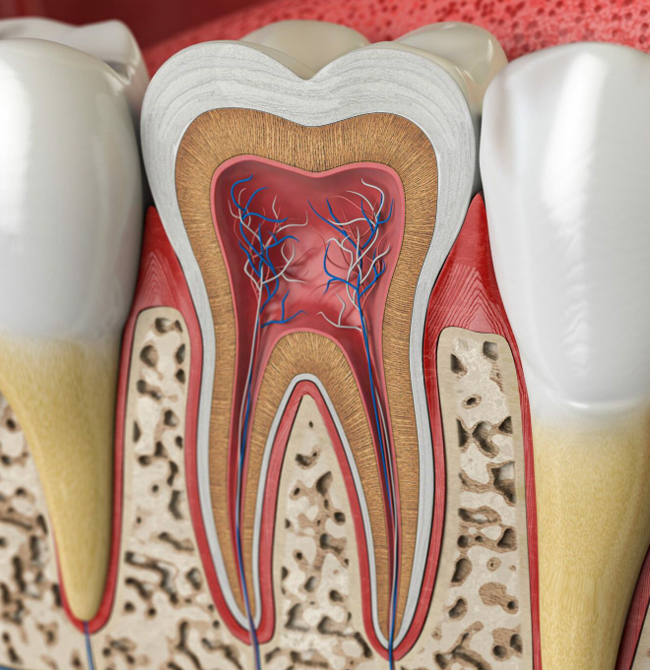
The Layers of Tooth Structure
The teeth are made up of dental enamel, dentin, and pulp. Dental enamel is the outer layer, while dentin is a softer layer underneath. The pulp, which is a soft tissue, is located beneath the dentin and contains connective tissue, nerves, and blood vessels.
Under normal circumstances, the pulp is well protected by enamel and dentin. However, if bacteria enter the area due to a deep cavity, fracture, or tooth injury, an infection can occur.
An infected tooth typically causes intense pain, and if left untreated, the pain will worsen over time. In such cases, the only option is to remove the tooth, although this is not our first choice. Having missing teeth can lead to various oral health problems, including bone loss and movement of neighboring teeth. Root canal treatment provides a solution by eliminating the infection, preserving natural teeth, and restoring oral health. Compared to tooth extraction, root canal treatment is less painful and requires a shorter recovery period.
Signs That You May Need a Root Canal Treatment
Here are a few indications to be aware of that could suggest a tooth infection or abscess:
- I am currently dealing with a very painful toothache.
- I am feeling some discomfort or inflammation in my jaw area.
- I have been experiencing intense tooth sensitivity.
- I have noticed a gum bump that looks similar to a pimple.
- My gums appear to be swollen, red, or puffy.
- I may be experiencing an unpleasant taste or smell in my mouth.
If you notice any of the mentioned signs and suspect a tooth infection, please get in touch with our dental clinic in Marion right away. A timely response is crucial for addressing an infected root canal, not only to ensure your comfort but also to safeguard your overall health, safety, and well-being.
What happens during a root canal?
Getting a root canal can make patients anxious, but there is no need to be scared as it is not a frightening procedure. Our dentists use advanced 3-D cone-beam imaging to carefully plan your treatment, allowing them to see the tooth in three dimensions. This helps our dentists accurately assess the tooth's structure and customize the procedure to your specific needs. With the help of anesthesia and this state-of-the-art technology, patient comfort is greatly improved, leading to better overall results. After the procedure, most patients feel significant relief.